

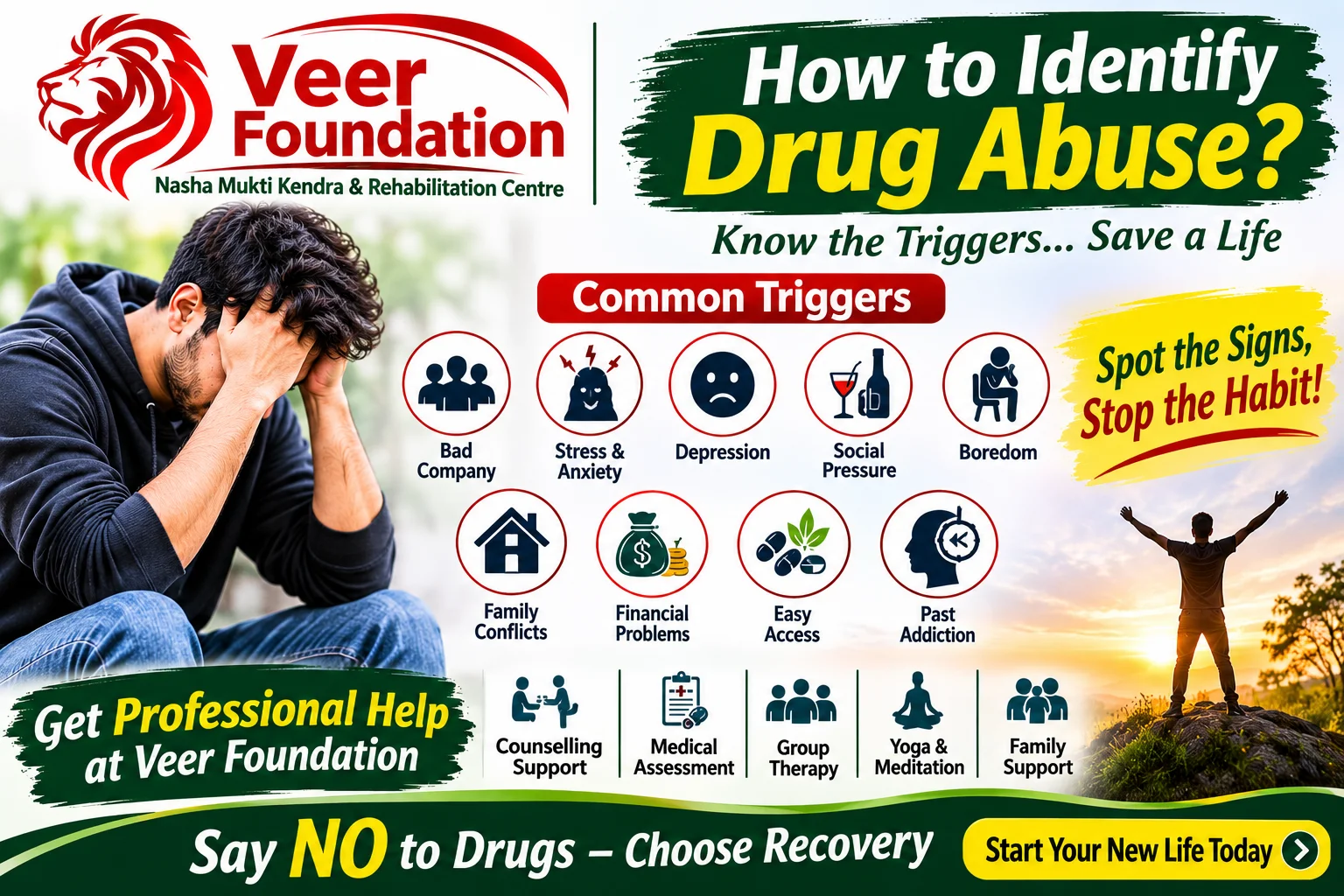
How to Identify Drug Abuse: Warning Signs, Causes and Treatment Support
Drug abuse is a serious concern that can affect physical health, mental well-being, family relationships and social life. In many cases, the signs develop gradually and may go unnoticed by family members. Recognising these changes early can help someone access the right treatment and support.
At Veer Foundation, we believe that awareness, understanding and timely professional help are important steps towards addiction recovery.
What Is Drug Abuse?
Drug abuse refers to the harmful or uncontrolled use of substances that can affect a person's health, behaviour and daily responsibilities. Continued substance use may lead to dependence, making it difficult for a person to stop without professional support.
Drug addiction can affect people from different age groups and backgrounds. It is not simply a lack of willpower. Appropriate assessment and individualised treatment can help people work towards recovery.
Common Signs and Symptoms of Drug Abuse
Identifying changes in behaviour and physical health can help families recognise a possible substance-use problem.
1. Behavioural and Emotional Changes
-
Frequent mood swings and sudden anger
-
Anxiety, irritability or unusual restlessness
-
Loss of interest in hobbies and daily activities
-
Avoiding family members and close friends
-
Changes in social circles without a clear explanation
-
Secretive behaviour or dishonesty
-
Constantly thinking about obtaining or using drugs
2. Physical Warning Signs
-
Red or unusually tired-looking eyes
-
Unexplained weight loss or weight gain
-
Trembling, shaking or unusual sweating
-
Runny nose or changes in physical appearance
-
Poor coordination or difficulty concentrating
-
Changes in sleeping and eating habits
-
Possible needle marks or other unexplained injuries
3. Changes in Daily Life
-
Poor performance at school, college or work
-
Repeated financial difficulties or frequently asking for money
-
Neglecting personal hygiene and responsibilities
-
Conflicts with family and friends
-
Missing important appointments or commitments
-
Spending excessive time or money obtaining substances
Important: These signs do not automatically mean someone is addicted. Other health or personal issues can cause similar changes. A qualified healthcare professional should assess the person's situation.
Why Is Early Identification Important?
Recognising drug abuse early can help reduce its impact on a person's health, relationships and future. Seeking help before problems become more severe may make it easier to address substance use and develop healthier routines.
Early support can help individuals:
-
Understand their substance-use problem
-
Receive an appropriate professional assessment
-
Address physical and emotional difficulties
-
Improve family communication and relationships
-
Develop healthier habits and coping skills
-
Build a structured recovery and aftercare plan
How Is Drug Addiction Identified?
Drug addiction should be assessed by a qualified healthcare professional or addiction specialist.
An assessment may include:
1. Personal Consultation: Discussion about substance use, frequency, duration and its effect on daily life.
2. Medical Evaluation: A physical examination and review of relevant health concerns.
3. Behavioural Assessment: Understanding emotional changes, habits, relationships and daily responsibilities.
4. Individual Treatment Planning: Developing suitable recommendations according to the person's needs, health and substance-use history.
What Should You Do If You Identify Drug Abuse?
Recognising the problem is the first step. Taking the right action can help a person move towards recovery.
Step 1: Speak with Care and Understanding
Talk to the person calmly and privately. Explain your concerns without blaming, threatening or humiliating them. Listen to their difficulties and encourage them to consider professional help.
Step 2: Seek Professional Assessment
Contact a qualified healthcare professional or addiction specialist. They can assess the person's condition and recommend suitable treatment options.
Step 3: Explore Suitable Treatment Support
Depending on the assessment, treatment may involve medical care, supervised withdrawal management, individual counselling, group therapy, family support or rehabilitation services.
Step 4: Involve Family Members
Family support can play an important role in recovery. Loved ones can encourage healthy routines, participate in counselling when appropriate and help create a supportive home environment.
Step 5: Continue Recovery and Aftercare
Recovery is an ongoing process. Follow-up support, counselling, healthy activities and relapse-prevention planning can help individuals maintain progress.
How Veer Foundation Supports Drug Addiction Recovery
Veer Foundation – Nasha Mukti Kendra and Rehabilitation Support in Punjab focuses on helping individuals take positive steps towards a healthier and substance-free life.
Our recovery-support approach may include:
-
Individual Counselling: Personal sessions to discuss challenges, behaviour and recovery goals.
-
Group Therapy: Sharing experiences, developing confidence and learning from others.
-
Stress Management: Learning healthier ways to manage emotional pressure and difficult situations.
-
Meditation and Yoga: Encouraging relaxation, self-awareness and healthy routines.
-
Recreational Activities: Activities such as volleyball, cricket, chess, carrom and table tennis to encourage positive engagement.
-
Family Support: Encouraging better understanding and communication between individuals and their families.
-
Aftercare Guidance: Continued follow-up and recovery guidance to support long-term progress.
Medical assessment and withdrawal management should be provided or arranged through appropriately qualified healthcare professionals whenever required.
How to Help Someone Who Denies Drug Addiction
Sometimes a person may not recognise the seriousness of their substance use or may be unwilling to discuss it. Families can help by:
-
Choosing a calm and appropriate time to talk.
-
Sharing specific concerns instead of making accusations.
-
Avoiding arguments, threats and public embarrassment.
-
Encouraging a professional consultation.
-
Seeking guidance from an addiction counsellor about how to approach the situation.
-
Supporting the person while maintaining healthy family boundaries.
A planned family conversation with professional guidance may be helpful when someone refuses to accept support.
Frequently Asked Questions
1. What are the first signs of drug abuse?
Early warning signs may include mood changes, secrecy, poor concentration, changes in sleep, unusual financial demands and reduced interest in daily responsibilities.
2. Can drug addiction be identified through behaviour?
Behavioural changes can indicate a possible problem, but they cannot confirm addiction. A professional assessment is important.
3. When should someone seek drug addiction treatment?
It is advisable to seek professional help as soon as substance use begins affecting health, relationships, work, education or daily life.
4. How can families help someone with drug addiction?
Families can offer emotional support, communicate without judgement and encourage professional assessment and appropriate treatment.
5. Does drug addiction treatment include counselling?
Counselling can be an important part of addiction treatment. Individual and group sessions may help people understand their behaviour and develop healthier coping strategies.
6. Is aftercare important after rehabilitation?
Yes. Continued guidance, follow-up support and relapse-prevention planning can help individuals maintain their recovery progress.
Take the First Step Towards a Drug-Free Life
Do not ignore the warning signs of drug abuse. Early awareness, professional guidance and family support can make a meaningful difference.
Contact Veer Foundation for information about drug addiction treatment and rehabilitation support in Punjab. Start the journey towards a healthier, happier and substance-free future.
Recognise the Signs. Take the First Step.
Say No to Drugs. Choose Recovery.
Veer Foundation – Drug Addiction Treatment & Rehabilitation Support in Punjab


